
Colored Rubber Infill Granules for Synthetic Tennis & Padel Courts | SBR Anti-Wear | Tennis Court
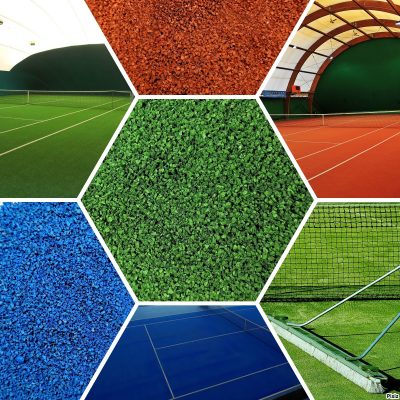
Tennis Court is Prismi’s specialist range of colored SBR rubber infill granules for synthetic grass tennis, padel and multipurpose sports courts, manufactured in Italy since 1990. The Rubber Sand granules — 100% vulcanized SBR 1502 rubber, coated in red, blue and green — have a 0.5–1.5 mm particle size and a calibrated hardness of 58–62 Shore A, specifically designed for infilling short, dense synthetic grass surfaces.
The main advantage over silica sand is the elimination of slide burns: rubber does not heat up like quartz under direct sunlight and does not abrade synthetic fibres. Standard quantity: 4.5 kg per m² per 10 mm of infill depth, with particle size analysis carried out periodically per EN 933-1. The product is also applied in a 20% volumetric blend with colored sands to prevent compaction of the base layer on synthetic clay courts.
Installers and facility managers: contact us to receive full technical data sheets and a tailored quote for your court surface.
Benefits of SBR rubber infill for synthetic tennis and padel courts
Rubber Sand infill from Tennis Court by Prismi delivers measurable technical advantages over traditional silica sand across four areas.
Court surface protection: vulcanized SBR rubber with a hardness of 58–62 Shore A does not erode synthetic fibres during slides the way angular silica sand does. This extends the useful life of the carpet and reduces maintenance and replacement costs.
Player safety: unlike quartz, rubber granules do not absorb and retain solar heat, eliminating the risk of slide burns on padel and outdoor tennis courts — a fundamental safety requirement for both covered and open facilities.
Stability and drainage: the 0.5–1.5 mm particle size ensures even distribution within the synthetic pile depth, maintaining consistent ball bounce and allowing natural rainwater drainage.
Versatility: applicable as a full-color infill — red, blue or green — or mixed at 20% by volume with colored clays for synthetic clay court systems, breaking base layer compaction over time.
Applications | padel, tennis and multipurpose synthetic courts
-

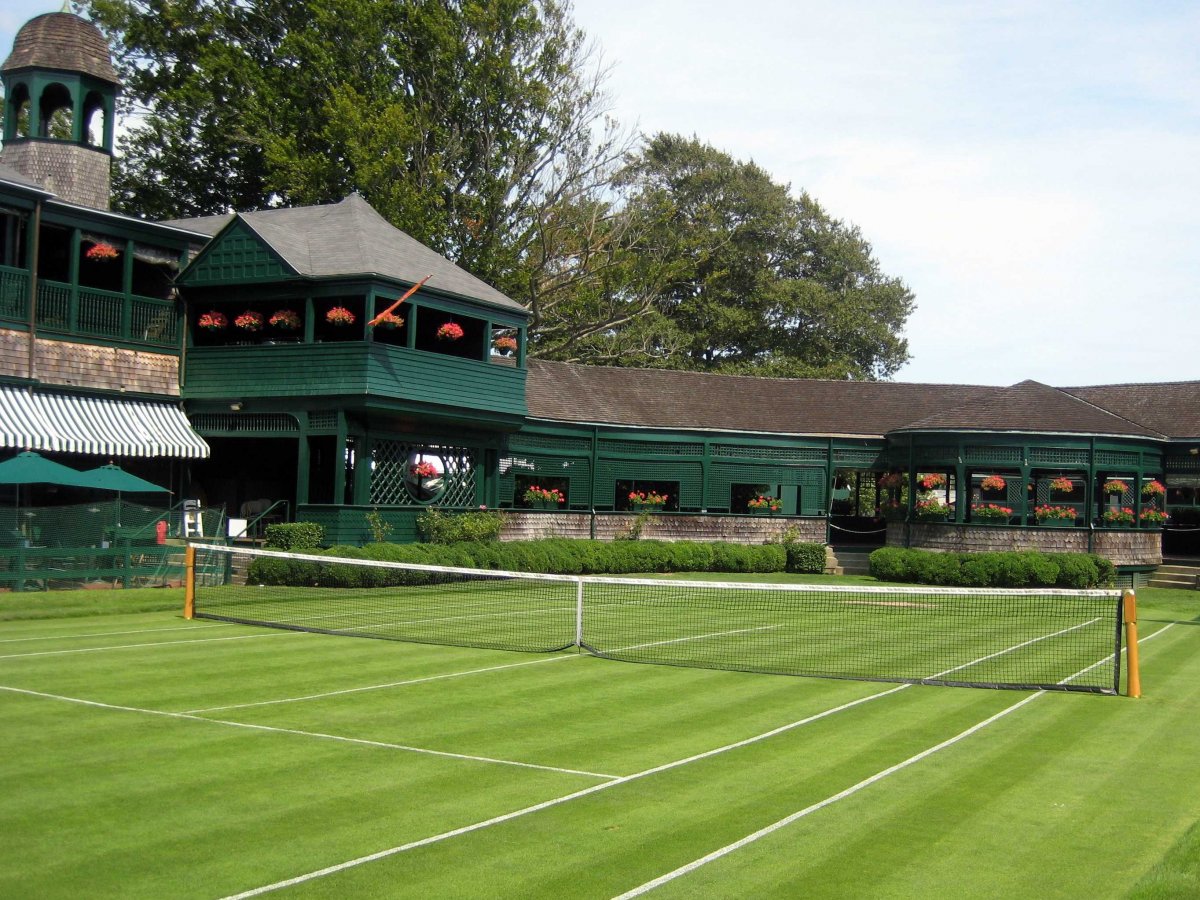
- synthetic tennis infill green
-
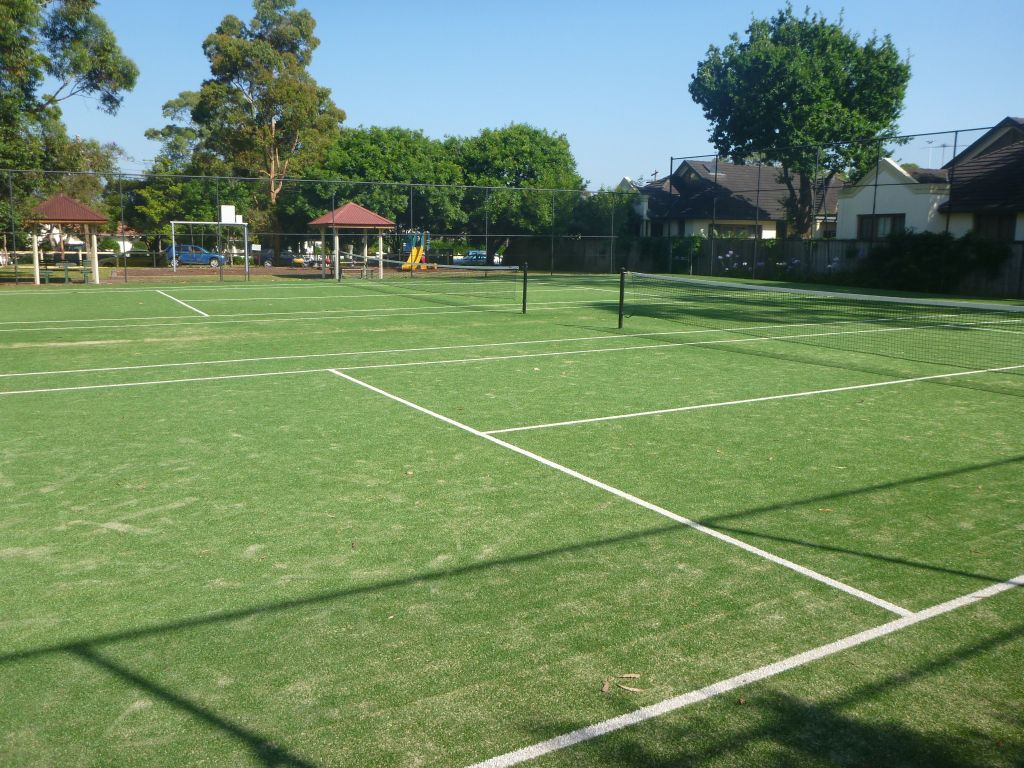
- artificial grass tennis clogged green rubber
-
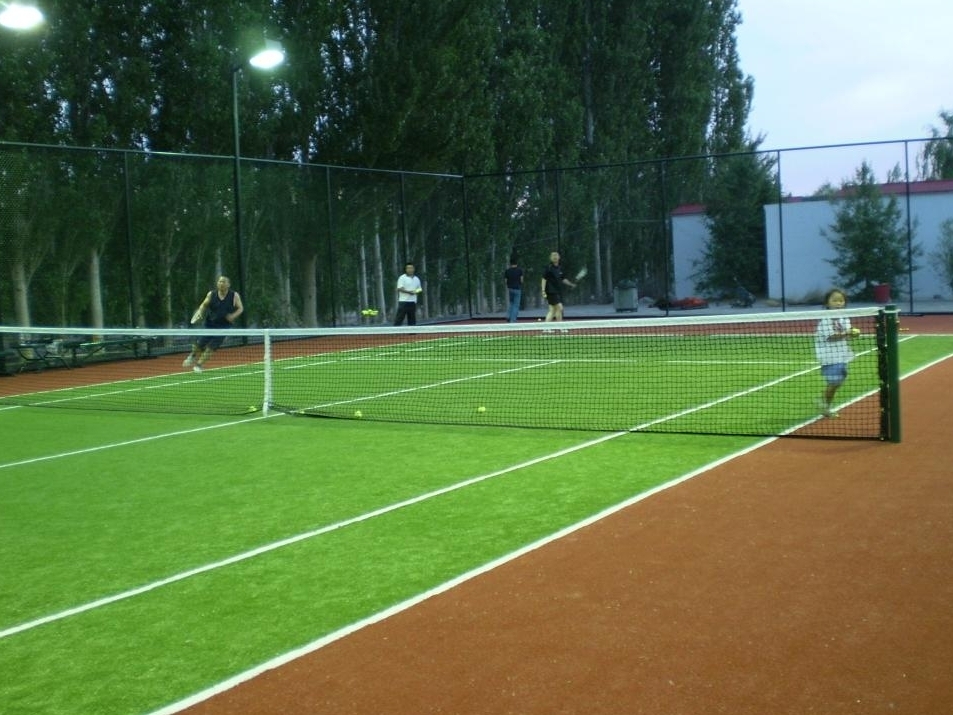
- synthetic two-tone tennis
-
- clay tennis
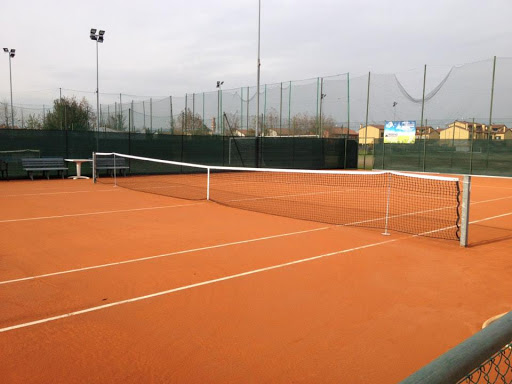
-
- blue tennis synthetic grass
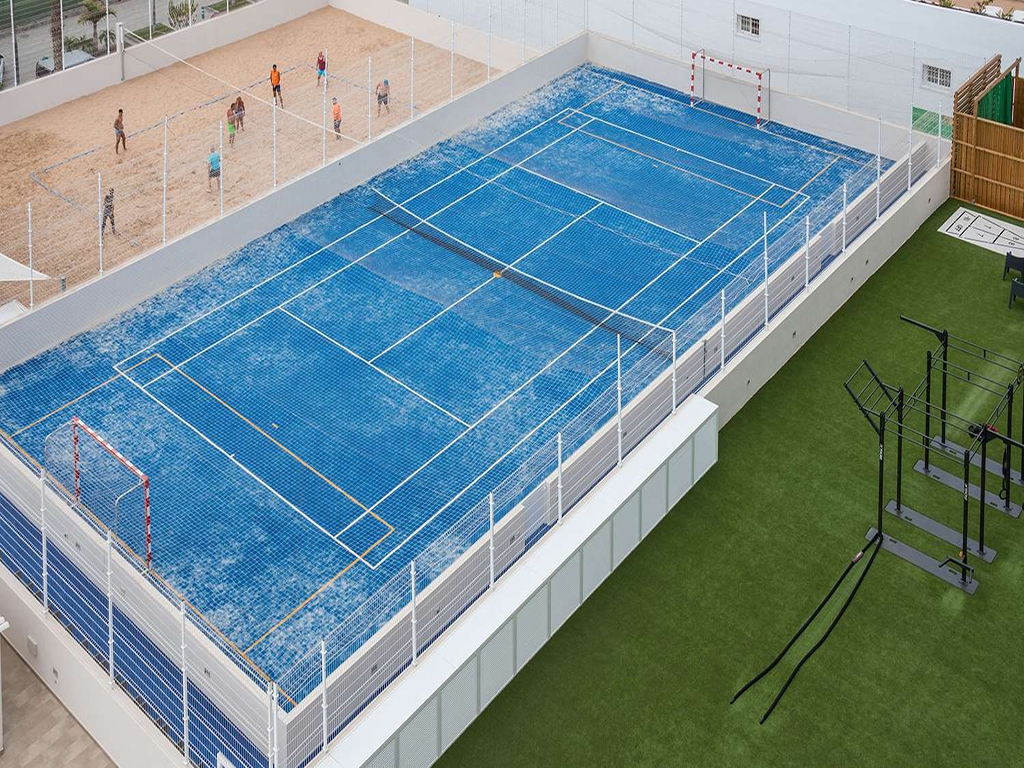
-

- artificial grass for tennis with infilled green rubber
Tennis Court range | colors and technical specifications
Rubber Sand Red | red SBR rubber infill for tennis and padel courts
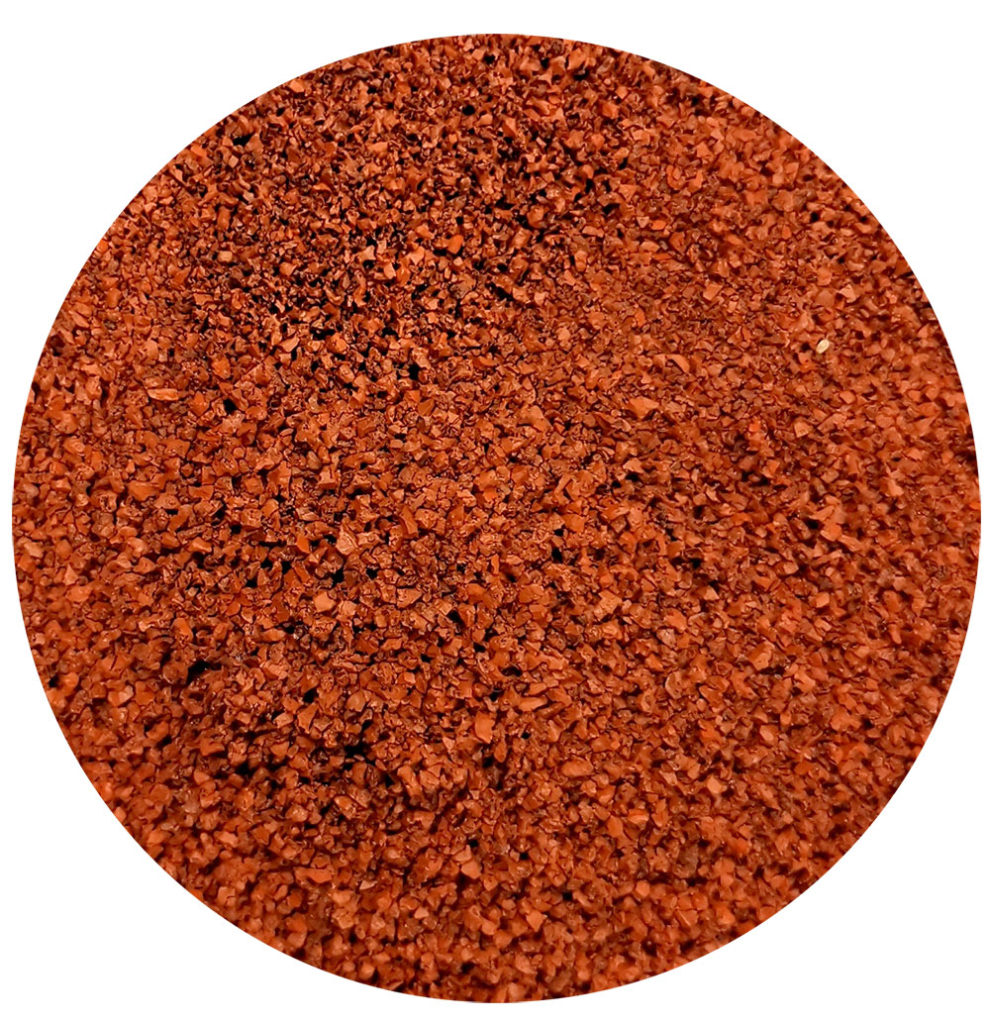
Rubber Sand Red is Prismi’s coated red vulcanized SBR 1502 rubber granule for synthetic grass infill on tennis, padel and multipurpose courts. Particle size 0.5–1.5 mm. Hardness 58–62 Shore A. Absolute density 1.13 g/cm³. Standard quantity: 4.5 kg/m² per 10 mm depth. Light stability 95%, abrasion resistance 97%. Periodic particle size analysis per EN 933-1. Technical data sheet available.
Rubber Sand Blue | blue SBR rubber infill for padel and tennis synthetic courts
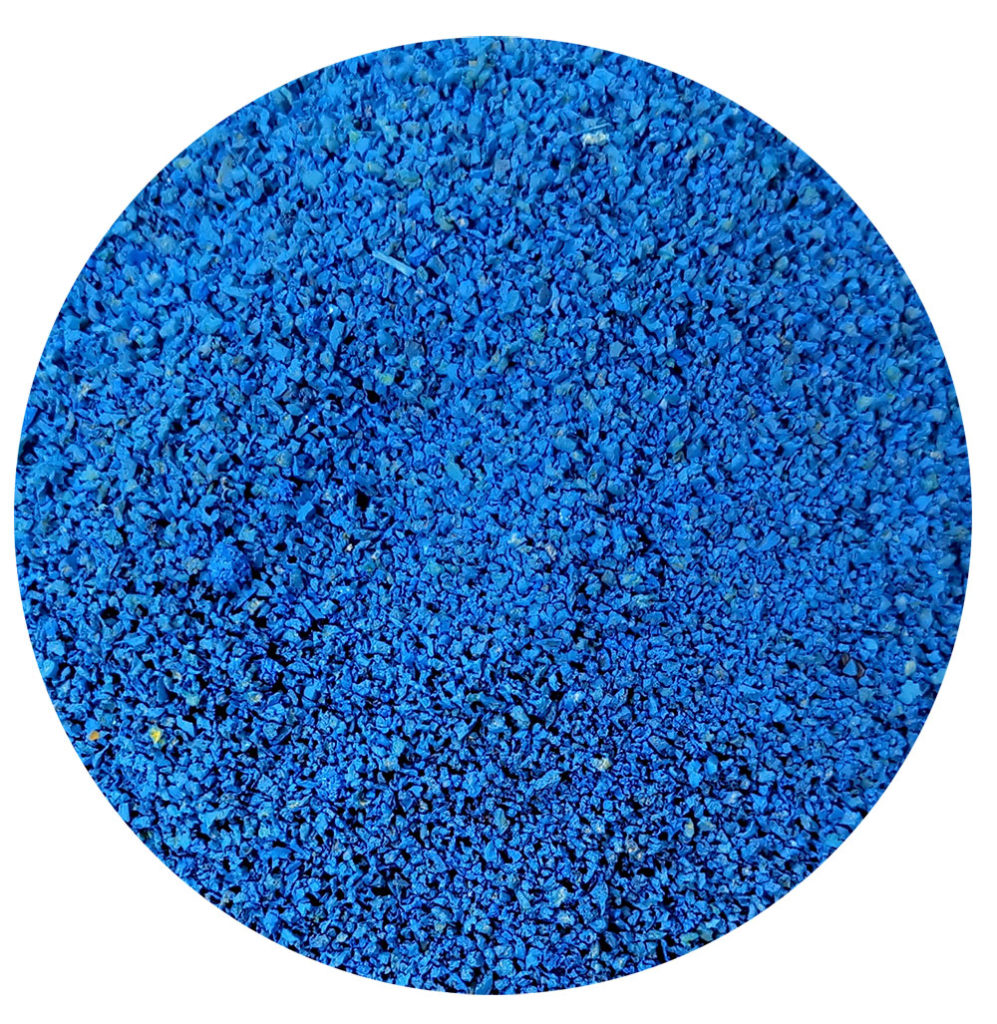
Rubber Sand Blue is Prismi’s coated blue vulcanized SBR 1502 rubber granule for synthetic grass infill on tennis, padel and multipurpose courts. Particle size 0.5–1.5 mm. Hardness 58–62 Shore A. Absolute density 1.13 g/cm³. Standard quantity: 4.5 kg/m² per 10 mm depth. Light stability 90%, abrasion resistance 90%. Periodic particle size analysis per EN 933-1. Technical data sheet available.
Rubber Sand Green | green SBR rubber infill for synthetic tennis and padel
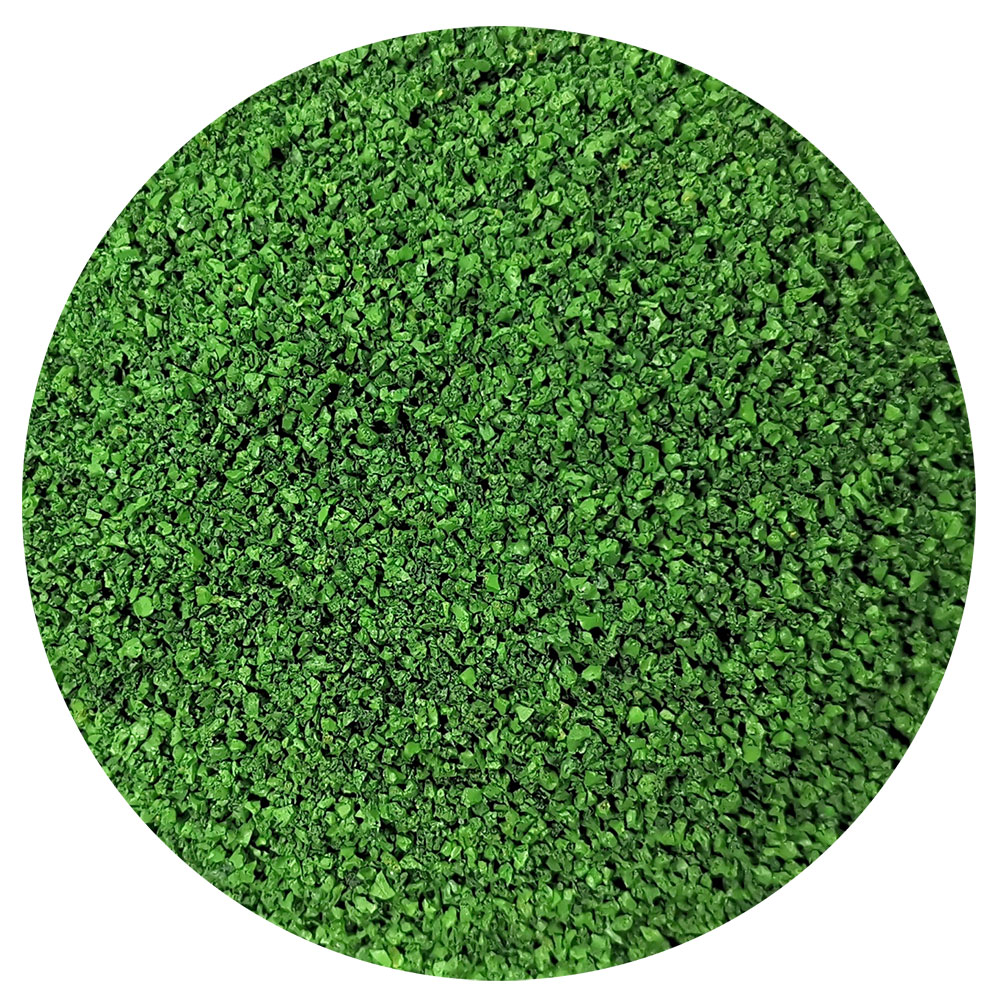
Rubber Sand Green is Prismi’s coated green vulcanized SBR 1502 rubber granule for synthetic grass infill on tennis, padel and multipurpose courts. The green color integrates naturally with the synthetic carpet surface. Particle size 0.5–1.5 mm. Hardness 58–62 Shore A. Absolute density 1.13 g/cm³. Standard quantity: 4.5 kg/m² per 10 mm depth. Light stability 95%, abrasion resistance 97%. Technical data sheet available.
Building or renovating a padel or tennis court with synthetic grass? Contact us to receive complete technical data sheets, a surface quantity calculation and a direct-from-manufacturer quote.
Frequently asked questions about rubber infill for tennis and padel courts
What is the difference between SBR rubber infill and silica sand on synthetic tennis courts?
SBR rubber infill provides three key advantages over silica sand on synthetic courts. First, it eliminates slide burns: rubber does not reach the surface temperatures that quartz does under direct sunlight. Second, it is less abrasive on synthetic fibres — its calibrated hardness of 58–62 Shore A means the carpet lasts longer and requires less frequent replacement. Third, it maintains a more consistent playing surface over time, as rubber does not compact progressively the way silica sand does after repeated rainfall and court use.
How much rubber infill is needed per m² for a tennis or padel court?
The standard quantity for Prismi Rubber Sand granules is 4.5 kg per m² per 10 mm of infill depth (±10%). Infill depth varies depending on the synthetic carpet type: on padel courts with short-pile grass, typical depths range from 8 to 12 mm. For an accurate calculation based on your court dimensions, carpet type and target infill depth, contact our technical office. Particle size is 0.5–1.5 mm, with periodic analysis carried out per EN 933-1.
Can Rubber Sand granules be blended with colored sand on clay-type synthetic courts?
Yes. In addition to use as a full-color infill on synthetic grass courts, Rubber Sand granules are applied in a 20% volumetric blend with colored sands on synthetic clay systems. The primary function of the blend is anti-compaction: the rubber maintains the friability of the base layer, preventing the colored sand from solidifying under the combined effect of rain and court traffic. The result is a more responsive surface with consistent ball bounce over the court’s service life.
Do Prismi Rubber Sand granules come from recycled tyres?
No. Prismi Tennis Court Rubber Sand granules are produced from pre-consumer secondary SBR 1502 rubber raw materials sourced from industrial production waste — not from recycled post-consumer tyres (ELT). This ensures a very high purity level: impurities below 0.001% by weight, no steel wire inclusions and consistent granulometric uniformity. The material is manufactured at our plant in Monteprandone (Ascoli Piceno), Italy, in operation since 1990.
Can different colors be used in different zones of the same court?
Yes. The three colors of the Tennis Court range — Rubber Sand Red, Blue and Green — can be combined to create two-tone or three-tone surfaces on the same court, differentiating service corridors, baseline zones or player areas. This solution is particularly valued on padel courts and multipurpose facilities, where color differentiation also serves a clear sightline and zoning function. Contact our sales office to define the zone layout and the corresponding quantity calculation per area.